

To date, the most common cancer affecting women is breast cancer, such that it takes up 29.4% of cancer diagnoses amongst Singaporean women. With that said, early detection is the best preventive measure against cancer, one essential tool is the mammogram.
The Bone Mineral Densitometry test uses X-rays to estimate bone density and thickness, measuring how much calcium and minerals are in a part of the bones.
Mammograms are used as a screening tool to detect early breast cancer in women experiencing no symptoms as well as to detect and diagnose breast ailments in women experiencing symptoms such as a lump, pain or nipple discharge.
We provide mammogram screening in Singapore as part of our services.
The best time for a mammogram is one week after your menstruation.
Please inform your doctor or radiographer if there is a possibility that you are pregnant.
We recommend that women undergoing mammography do not wear deodorant, talcum powder or lotion under your arms or on your breasts on the day of the exam. These can appear on the image as calcium spots. Bring along any prior mammograms for the radiologist to compare.
Who Should Consider Screening
Screening recommendations may vary based on age, personal risk factors, symptoms, and your doctor’s advice. In Singapore, women aged 40 to 49 may wish to discuss the benefits and limitations of screening with a doctor, while women aged 50 and above are generally encouraged to go regularly at recommended intervals.
What to consider before booking:
| In your 40s
screening may be considered after discussion with a doctor |
50 and above
regular screening may be recommended at routine intervals |
| If you have symptoms
such as a lump, nipple discharge, or breast pain, clinical evaluation may be needed instead of routine screening |
If you have higher risk
such as family history, discuss personalised screening advice with your doctor |
Mammogram Pre-screening Preparation
- Do not apply perfume, deodorant, talcum powder or body lotion before your mammography session.
- Bring along previous mammogram films (if any).
- Arrange for your session about one week after the last day of your menstruation for best results.
- Unless there are specific risk factors, mammography is NOT recommended if you are below 40 years old.
- If you are breastfeeding, you should ideally stop for about 6 months before doing mammography.

What Happens During Your Appointment
A radiographer will guide you through the imaging process step by step. During the examination, each breast is positioned and gently compressed to obtain clear images. This may feel uncomfortable for some individuals, but the compression only lasts briefly. The appointment is usually completed within a short visit, depending on the imaging required.
What to expect:
- Registration and verification of your details
- Positioning by the radiographer for the images
- Brief compression of each breast to improve image quality
- Completion of the scan before you leave the clinic
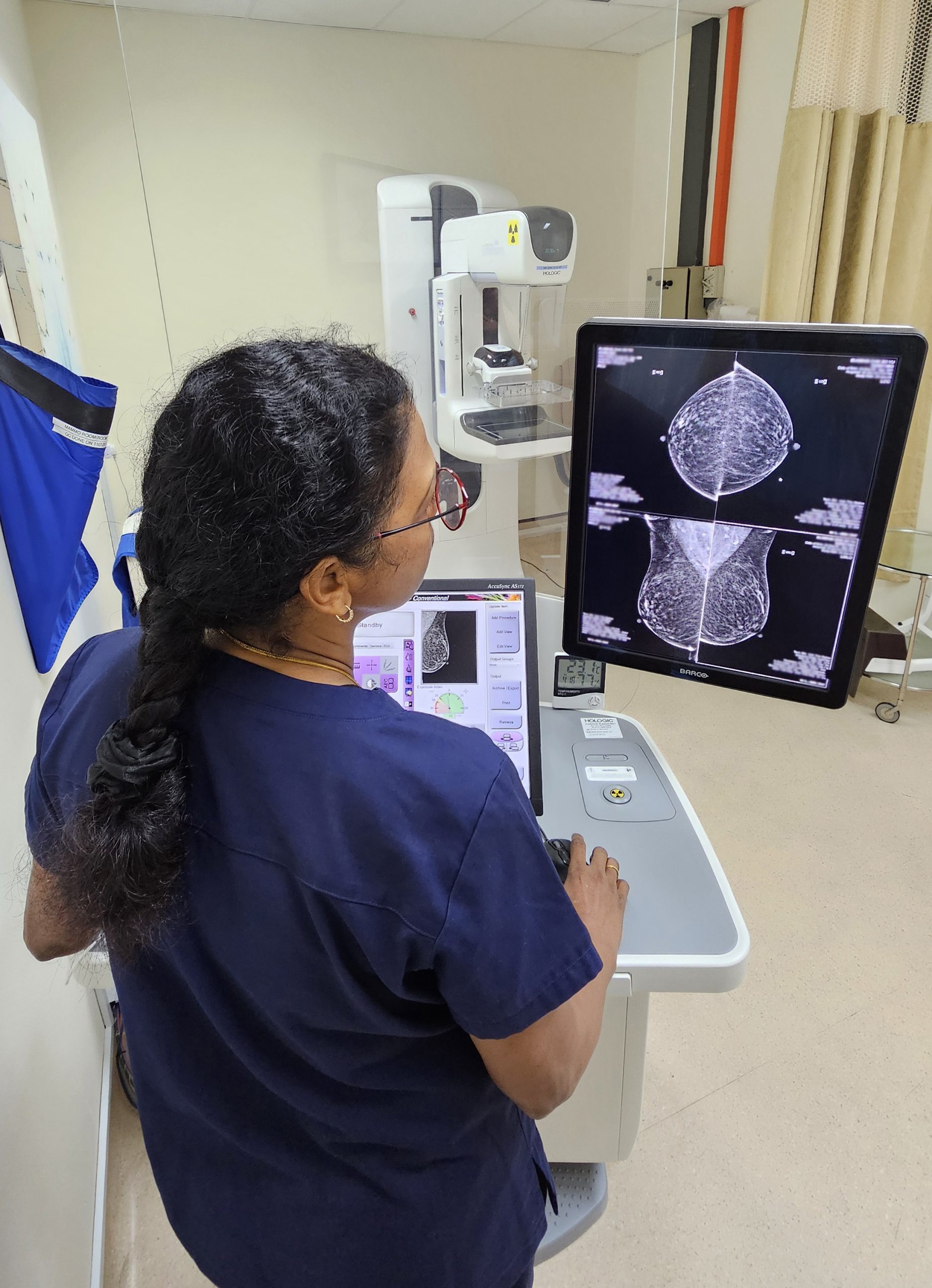
Back to other medical imaging services.
Results And Next Steps
After your scan, the images are reviewed according to the clinic’s reporting workflow. If additional review is needed, you may be advised on the next steps, which can include further imaging or a follow-up consultation.
You may wish to clarify:
- How results will be communicated
- When they are expected to be available
- Whether further assessment may be recommended if something needs closer review
Mammogram FAQs
1) Who should consider regular breast screening?
Regular breast screening may be considered by women based on age, personal risk factors, and a doctor’s advice. Women aged 40 and above are commonly encouraged to review their screening needs, while those with a family history of breast cancer or other risk factors should discuss earlier or more personalised screening intervals with a doctor.
2) How often should I go for screening?
Screening intervals may vary by age and individual risk. In the Singapore sources reviewed, women aged 40 to 49 are commonly advised to consider screening yearly after discussing the benefits and limitations with a doctor, while women aged 50 and above are commonly advised to go for screening every 2 years.
3) What happens during the appointment?
During the appointment, staff may first ask about your medical history. A female radiographer will then perform the examination. Your breasts will be positioned and briefly compressed between plates to capture the images. The full process usually takes about 15 to 20 minutes.
4) Do mammograms hurt?
Most women find mammograms uncomfortable rather than truly painful. The pressure from breast compression may feel uncomfortable, but it usually lasts only a few seconds for each image. Some women experience more discomfort than others depending on breast sensitivity.
5) How should I prepare before the appointment?
Before the appointment, it is generally advisable to:
- wear a comfortable two-piece outfit
- avoid applying deodorant, lotion, perfume, powder, or ointment on the chest and underarm area on the day of screening
- avoid wearing jewellery that may interfere with imaging
- arrive a little earlier for registration
- inform the team if you are pregnant or may be pregnant
6) Can breast ultrasound replace routine mammography?
No. Breast ultrasound is not considered a replacement for routine mammography. It is generally used as a supplementary test in selected situations, such as for women with dense breast tissue, for those who cannot undergo mammography, or for further evaluation of an area of concern found on mammography.